Director’s Message
Let’s rise to the challenges of tomorrow… In a rapidly evolving higher education landscape, the Polytech network — a consortium of 16 French engineering schools — trains more than 10% of all engineers in France each year and brings together 17,500 engineering students and over 100,000 Polytech graduates.
Founding member of the Polytech network and an engineering school within Clermont Auvergne INP, the Institute of Engineering Sciences at the University Clermont Auvergne, Polytech Clermont has built its reputation over more than 50 years by training over 7,700 high-level engineers capable of meeting the challenges of the 21st century.
Since its creation, the school — formerly the University Center for Science and Technology at Blaise Pascal University (ex CUST) — has trained engineers through initial and continuing education, as well as via Recognition of Prior Learning (VAE), in five major fields of specialization: Biological Engineering, Civil Engineering, Electrical Engineering, Mathematical Engineering and Data Science, and Physical Engineering. A sixth specialization, accessible through apprenticeship, Production Systems Engineering, was introduced in 2008. Additionally, a specialized Master’s program (Bac+6), called GP-BIM and focused on the use of BIM for integrated management of infrastructures, civil engineering works, and buildings, has been offered since 2017.
Polytech Clermont is now recognized as a five-year engineering program, with the first two years conducted in close partnership with the Faculty of Science and Technology at the University Clermont Auvergne as part of the Polytech Engineering Students Pathway (PeiP). Polytech Clermont has also been ISO 9001 certified for all its programs since February 2014 and Qualiopi certified since May 2021.
Towards Sustainable and Collaborative Engineering
Today’s — and tomorrow’s — engineer must be able to face multiple challenges. Their scientific and technical knowledge must allow them to combine knowledge, skills, and professional expertise to reconcile societal issues with technical solutions. They are also citizens, and their education must help them become aware of their social responsibilities. Finally, engineering projects increasingly take place within multicultural teams, requiring students to develop a true international mindset.
Polytech Clermont’s goal, aligned with the values of the Polytech network and in response to current societal challenges, is to train collaborative engineers who contribute to a sustainable world.
To meet these challenges and adapt to the transformations shaping the engineering profession, Polytech Clermont bases its development on four pillars:
- An educational offering aimed at expertise and excellence, addressing major societal challenges such as energy, sustainable materials, and future mobility,
- An ambitious research policy integrated within the laboratories of the University Clermont Auvergne,
- A strong and innovative strategy of partnerships and close ties with industry,
- The development of national and international networks, based on a selective and proactive policy grounded in research and pedagogical exchanges.
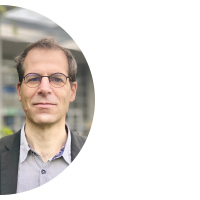
Pierre BREUL
Director of Polytech Clermont