
[With the United Kingdom] Polytech Clermont welcomes Marco Francesco Funari for an international research collaboration
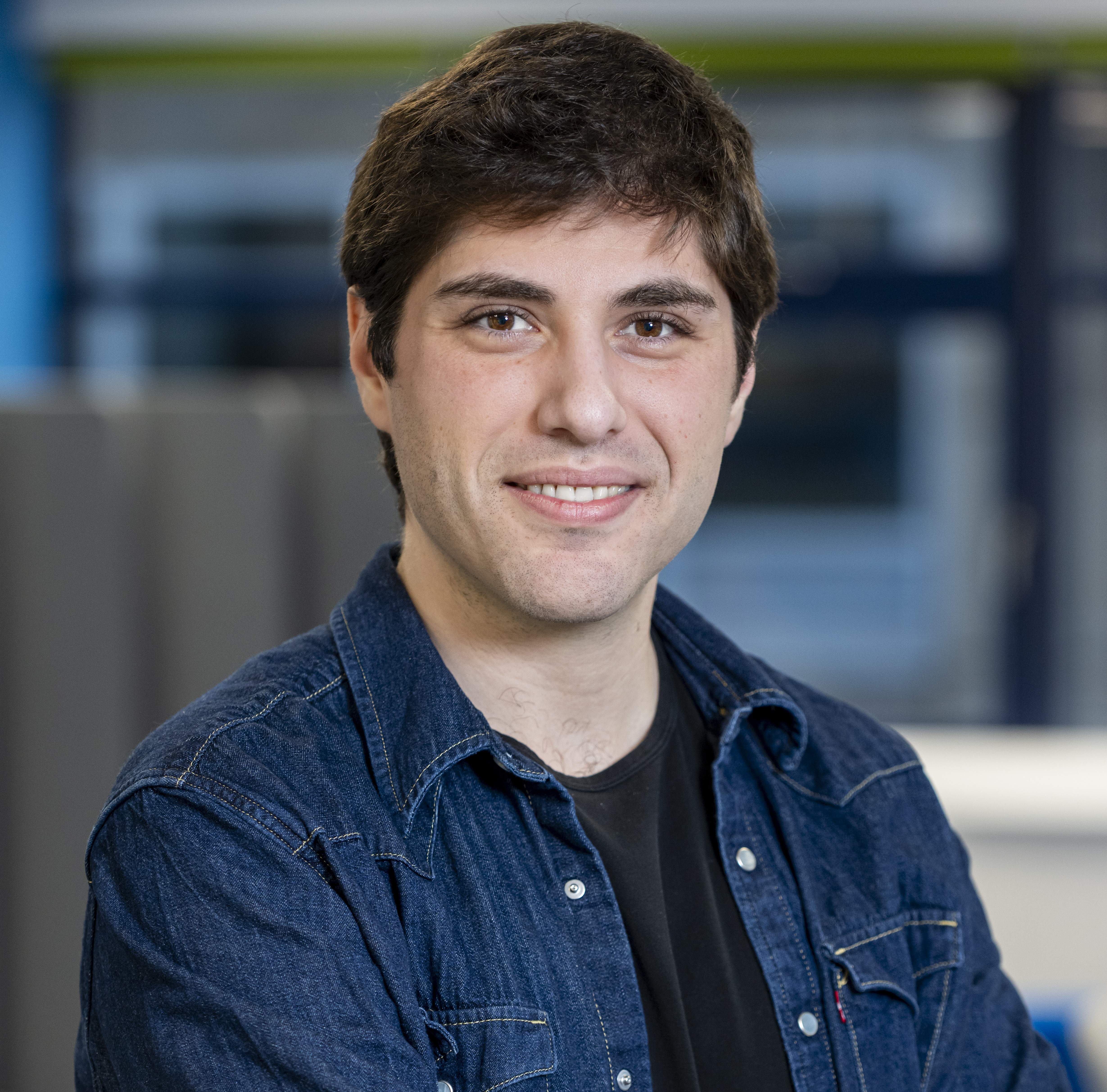
Polytech Clermont recently welcomed Marco Francesco Funari, a Senior Lecturer at the University of Surrey (United Kingdom), for a scientific visit focused on collaboration and innovation in civil engineering. Originally from Italy, he specializes in the structural behaviour and durability of masonry and historic structures.
An expert in heritage structures and their durability
Marco Francesco Funari’s research focuses on the analysis of the behaviour of masonry structures, particularly historic buildings. By combining experimental approaches and advanced numerical modelling, his work aims to better understand degradation mechanisms and to develop solutions for the long-term preservation of built heritage.
A scientific collaboration at the heart of civil engineering challenges
His stay at Polytech Clermont is part of a broader effort to strengthen international collaborations, particularly between France and the United Kingdom. “Polytech Clermont offers an ideal environment to exchange with researchers working at the interface between mechanics, materials and sustainability,” he explains.
During this visit, he has been working closely with several faculty members of the school, including Nathanaël Savalle, Chaimaa Jaafari, Omayma Homoro and Aurélie Talon. Together, they are exploring topics related to BIM as well as advanced modelling and simulation of the seismic behaviour of historic buildings subjected to ground settlement.
His ten-day stay, from April 1 to April 10, is more specifically part of the research project led by Nathanaël Savalle, focused on the seismic vulnerability and strengthening of masonry houses subjected to differential settlement. As an external scientific advisor, Marco Francesco Funari contributed to defining a clear strategy for upcoming numerical simulations. This collaboration is expected to continue in the coming months and years, further strengthening the links between the research teams.
Research at the intersection of experimentation and modelling
The work carried out at Polytech Clermont combines laboratory testing, non-destructive techniques and multiscale numerical modelling. The objective is to improve the prediction of structural degradation and to support the development of preservation strategies adapted to current challenges in heritage and structural resilience.
Comparing the research environments in France and the United Kingdom, Marco Francesco Funari highlights their complementarity. In France, he notes the strong integration between engineering, materials science and applied mathematics, supported by well-structured research networks. In the UK, he observes a stronger emphasis on practical applications and industry links.
A rewarding human and scientific experience
Beyond the scientific aspects, he particularly appreciates the open and collaborative atmosphere at Polytech Clermont: “Discussions with colleagues and students have been very stimulating.” He also highlights the quality of life in Clermont-Ferrand, with its combination of natural surroundings and rich heritage, which contributes to making this experience particularly positive.
Encouraging openness and international collaboration