
[With Romania] Aurel STRATAN, a European expert in metal structures, on mobility at Polytech ClermontVoici la traduction en anglais de ton texte : --- Beyond his teaching activities, he is deeply involved in European standardization. He serves notably o
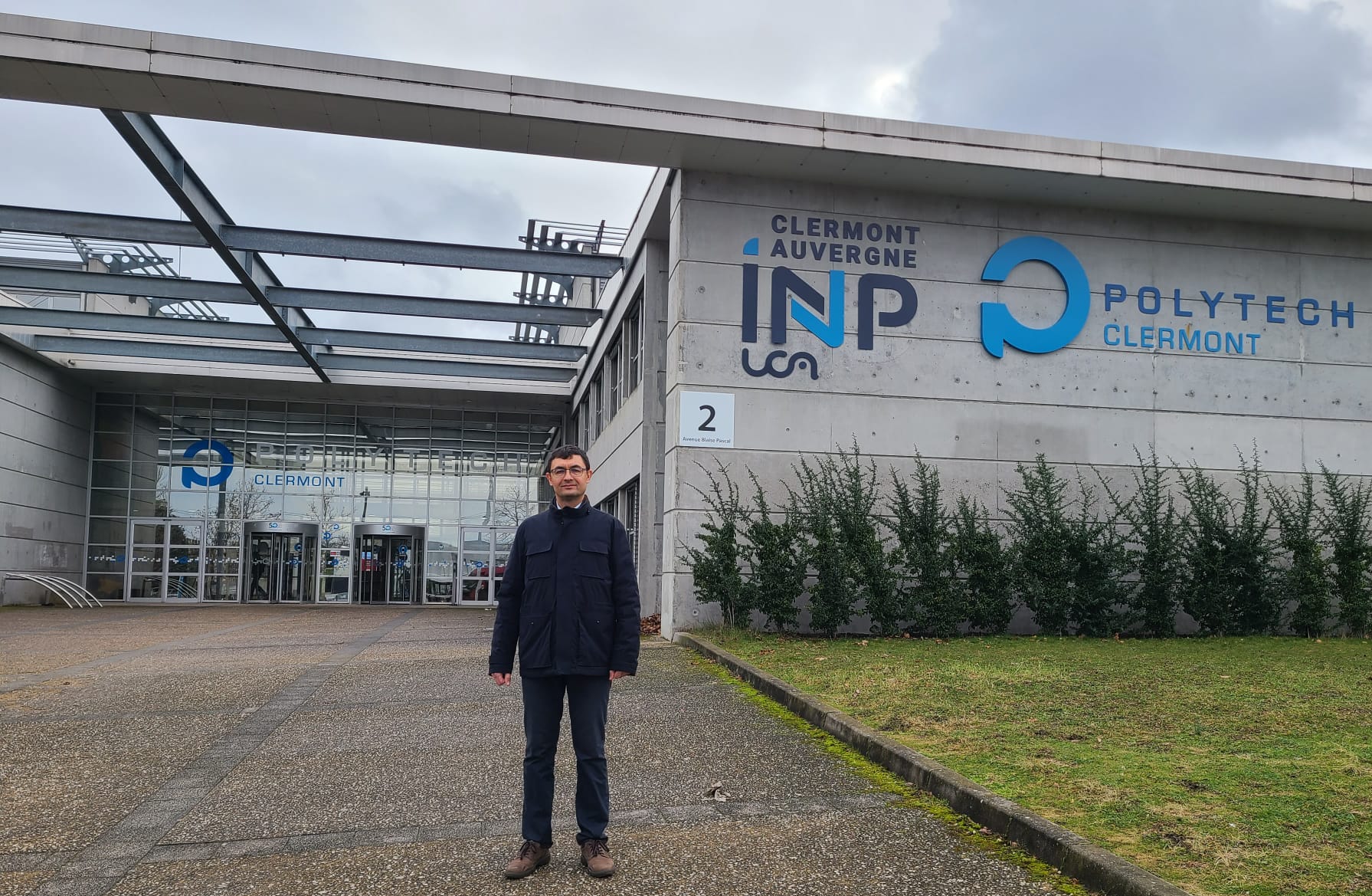
Recently visiting Polytech Clermont, Aurel STRATAN is a university professor and director of the Department of Metal Structures and Structural Mechanics (CMMC) at the Politehnica University of Timișoara, Romania. With over twenty years of experience in higher education and research, he specializes in steel structures and earthquake engineering.
Beyond his teaching activities, he is deeply involved in European standardization. He serves notably on the ECCS TC13 “Seismic Design” committee as well as in several working groups of CEN/TC250, contributing to the development of the second generation of structural Eurocodes.
Expertise in Structural Dynamics and Earthquake Engineering
Aurel STRATAN’s work focuses primarily on metal structures and seismic engineering, with a particular interest in structural dynamics. His involvement in European standardization bodies demonstrates his active role in shaping the technical frameworks used internationally.
His expertise directly contributes to improving seismic design methods and harmonizing engineering practices across Europe.
Academic Mobility to Strengthen Collaborations
His visit to France aims to reinforce academic and scientific links between the Politehnica University of Timișoara and Clermont Auvergne INP.
According to him, international mobility is an essential lever to enhance and gain recognition for academic programs, particularly in structural dynamics. It also represents a pedagogical enrichment opportunity: teaching in a dynamic international environment allows him to share educational practices and discover new ones.
A Pedagogical Contribution to Polytech Clermont
During his stay, Aurel STRATAN delivers a series of courses for Master’s students in Civil Engineering. The program covers fundamental principles of structural dynamics and earthquake engineering, offering students an international perspective on these key civil engineering topics.
Cross-Insights Between Romania and France
In his field, he notes that engineering principles are largely harmonized between the two countries, notably thanks to the shared use of Eurocodes for seismic design.
This shared regulatory basis facilitates academic and scientific exchanges while enriching each country’s pedagogical approaches.
Collaboration Focused on Sustainable Innovation
Since his arrival, he has particularly appreciated the quality of exchanges with his Clermont colleagues. Laboratory visits and scientific discussions have been, in his view, especially inspiring and open the way to future joint research projects.
They share common goals, including the development of sustainable and resilient structural systems, as well as the exploration of innovative practices such as reusing recovered steel elements.
A Message to Students and Colleagues
To students, he offers clear advice: fully seize international mobility opportunities. Exposure to an international curriculum broadens technical perspectives while developing intercultural and language skills.
To his colleagues, he calls for continued collaboration in advancing structural engineering, exploring sustainable practices, and inspiring new generations through a concrete and applied scientific approach.