
You are here : Accueil
[With Cameroon] Rachel Raïssa Ngono Mvondo Andjock: Cameroonian expertise in the service of sustainable construction
Published on March 24, 2026 – Updated on March 24, 2026
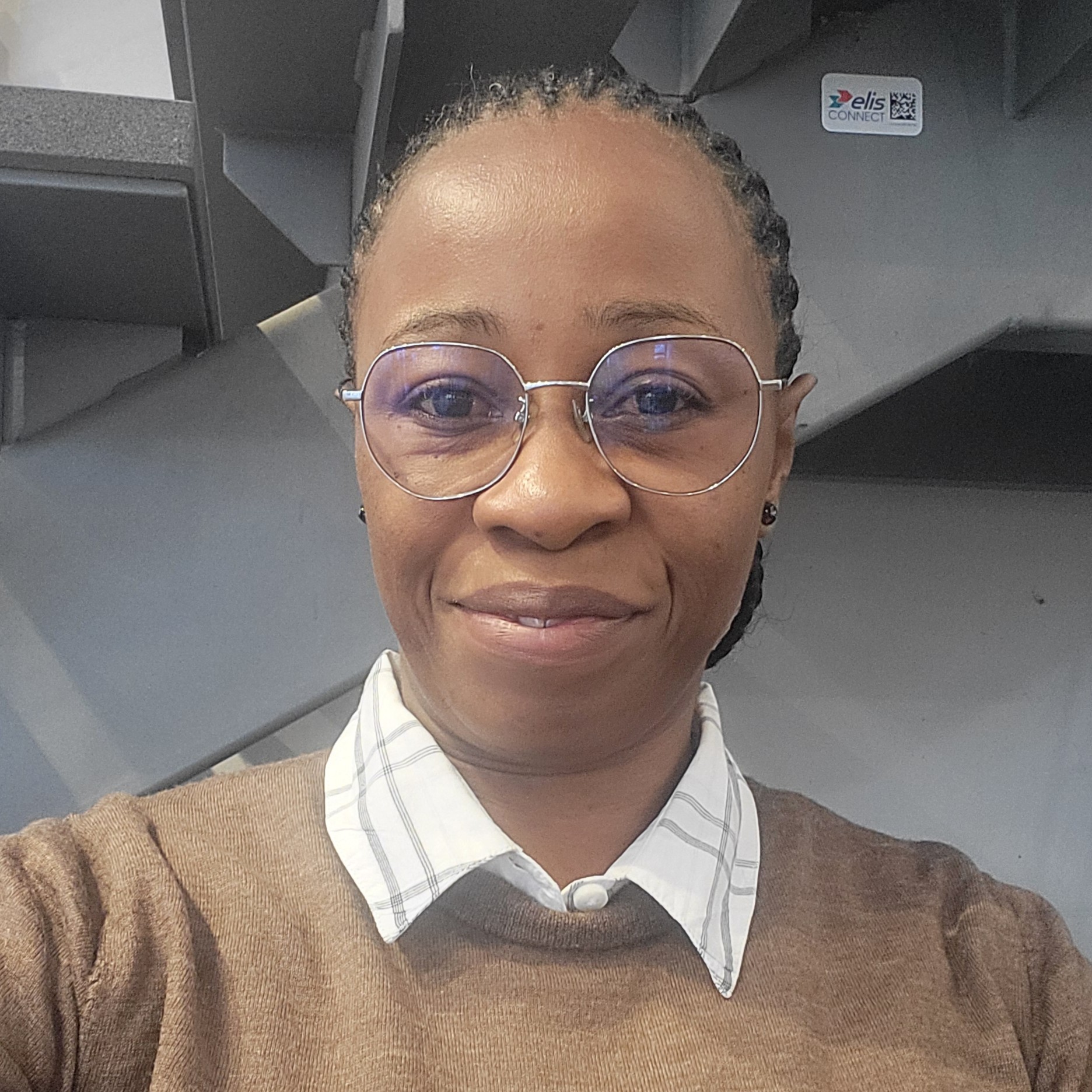
Polytech Clermont recently welcomed Rachel Raïssa NGONO MVONDO ANDJOCK, originally from Cameroon, for a rewarding scientific mobility. A Lecturer and Researcher in the Department of Industrial and Mechanical Engineering at the National Advanced Polytechnic School of the University of Yaoundé I, Rachel Raïssa brings her expertise in the valorization of tropical woods and sustainable construction in hot and humid climates.
A researcher passionate about the performance of tropical materials
Her work aims to develop an integrated approach to the performance and valorization of tropical woods. By combining multi-physical characterization, modeling, and decision-support tools, she seeks to create scientific benchmarks and concrete solutions for resilient and sustainable buildings adapted to tropical contexts.
A Franco-Cameroonian scientific collaboration
Her stay at Polytech Clermont is part of a strengthened scientific collaboration between INP Clermont Auvergne and ENSPY. « This mobility allows me to integrate into a structured research environment and exchange with teams working on topics complementary to mine », explains Rachel Raïssa. « It is also an opportunity to confront my approaches with other methods and enrich my scientific perspectives. »
Research at the heart of bio-based materials
At Polytech Clermont, Rachel Raïssa focuses her work on the thermo-physical and mechanical properties of bio-based materials. Her goal: to better understand their behavior under different climatic conditions and contribute to the development of integrated approaches to optimize their use in sustainable construction.
A stimulating scientific environment
Comparing her experience in France with that in Cameroon, she highlights the structuring of research infrastructures and access to advanced technical platforms that facilitate multi-scale analysis. « In Cameroon, these resources are more limited, so working here is a real opportunity », she notes. She also appreciates the richness of scientific exchanges and the diversity of profiles encountered, including administrative staff, which fosters collaboration and openness to new ideas.
A message for students and colleagues
Rachel Raïssa encourages students and researchers to cultivate curiosity and engage in international collaborations. According to her, the current challenges related to ecological transition and sustainable construction require multidisciplinary approaches and the valorization of local contexts. Engaging in scientific networks is, in her view, a major asset for producing relevant and impactful research.
Her work aims to develop an integrated approach to the performance and valorization of tropical woods. By combining multi-physical characterization, modeling, and decision-support tools, she seeks to create scientific benchmarks and concrete solutions for resilient and sustainable buildings adapted to tropical contexts.
A Franco-Cameroonian scientific collaboration
Her stay at Polytech Clermont is part of a strengthened scientific collaboration between INP Clermont Auvergne and ENSPY. « This mobility allows me to integrate into a structured research environment and exchange with teams working on topics complementary to mine », explains Rachel Raïssa. « It is also an opportunity to confront my approaches with other methods and enrich my scientific perspectives. »
Research at the heart of bio-based materials
At Polytech Clermont, Rachel Raïssa focuses her work on the thermo-physical and mechanical properties of bio-based materials. Her goal: to better understand their behavior under different climatic conditions and contribute to the development of integrated approaches to optimize their use in sustainable construction.
A stimulating scientific environment
Comparing her experience in France with that in Cameroon, she highlights the structuring of research infrastructures and access to advanced technical platforms that facilitate multi-scale analysis. « In Cameroon, these resources are more limited, so working here is a real opportunity », she notes. She also appreciates the richness of scientific exchanges and the diversity of profiles encountered, including administrative staff, which fosters collaboration and openness to new ideas.
A message for students and colleagues
Rachel Raïssa encourages students and researchers to cultivate curiosity and engage in international collaborations. According to her, the current challenges related to ecological transition and sustainable construction require multidisciplinary approaches and the valorization of local contexts. Engaging in scientific networks is, in her view, a major asset for producing relevant and impactful research.