
Meeting with Hélène De Baynast
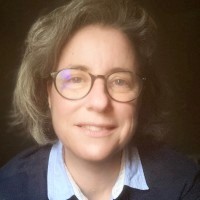
Polytech Clermont honors those who bring the school to life and inspire our engineering students daily. Today, we invite you to discover the career path and vision of our Deputy Director, Hélène DE BAYNAST, who is passionate about research and teaching.
What first attracted you to your field of research/teaching?
I fell into the world of research somewhat by chance during an internship. I immediately loved the challenging side of research, the desire to discover something new or more efficient through experiments and characterizations. What followed was a combination of circumstances, including a PhD scholarship and a teaching assistant position. Teaching then became an obvious choice.
The pros of research: great freedom! This freedom is the possibility of creating partnerships with other laboratories, changing research topics, or at least evolving within different themes.
Another advantage: openness! Research and teaching require continuous learning to keep up with technological developments.
The cons of research: time management. Not everything happens in a day.
The pros of teaching: the transmission of knowledge. Most of my teaching is in metallurgy. It is a science several millennia old. A piece of stone picked up by a Neolithic man now allows us to send humans into space. This required observing, testing, and understanding the infinitely small, moving from the atomic scale to the macroscopic scale, and mastering everything that makes up physics: mechanics, thermodynamics, quantum physics, and more.
Can you share a project or a recent innovation from your team that you are particularly proud of?
There are several: a patent, partnerships with industrial players, etc., but the most recent is the creation of the HEPHAESTUS Chair. Its objective is to develop techniques for the maintenance and rehabilitation of existing metal structures. To achieve this, I brought together very diverse research fields: Civil Engineering, metallurgy, corrosion, robotics, coating, water treatment... In this case, breaking down research silos was almost obvious, but it requires using a common vocabulary and, above all, opening up to fields far from our primary concerns and initial training. This brings us back to the need for continuous learning. HEPHAESTUS is an industrial research and training chair. It represents a "Company-School-Research" triad that I am particularly fond of.
How do you balance your life as a researcher/teacher with your personal life on a daily basis?
When you love what you do, you don't count the hours. For me, everything balances out, even if days are only 24 hours long. I think it’s important to know how to separate the two: leave work worries in the office in the evening and home worries at the doorstep in the morning.
What advice would you give to a future engineer who is still hesitating about their career path?
My advice: go into metallurgy! Joking aside, my advice is to follow your dreams. Sometimes you have to go through a period of hard and less exciting work, but what you learn at school will always be useful for an engineer: learning how to work, listen, retain information, and observe. Practical sessions (labs), projects, and internships are there to help them confirm their choice of fields of expertise.
In your opinion, what major technological (or pedagogical) trends will transform the engineering profession in the coming years?
That’s not an easy question. One first thinks of the development of AI. Engineers have more and more tools to work quickly, effectively, and reliably. But for me, an engineer must never lose sight of two things:
The fundamentals of science and technology. Theory and physical/chemical principles must not be overshadowed by information.
Human relations: an engineer never works alone, and the human factor must remain a major variable.